Diversity of Species discovered on Hard Substrate Deep-sea Ocean Floor
Munich, 26.05.2026
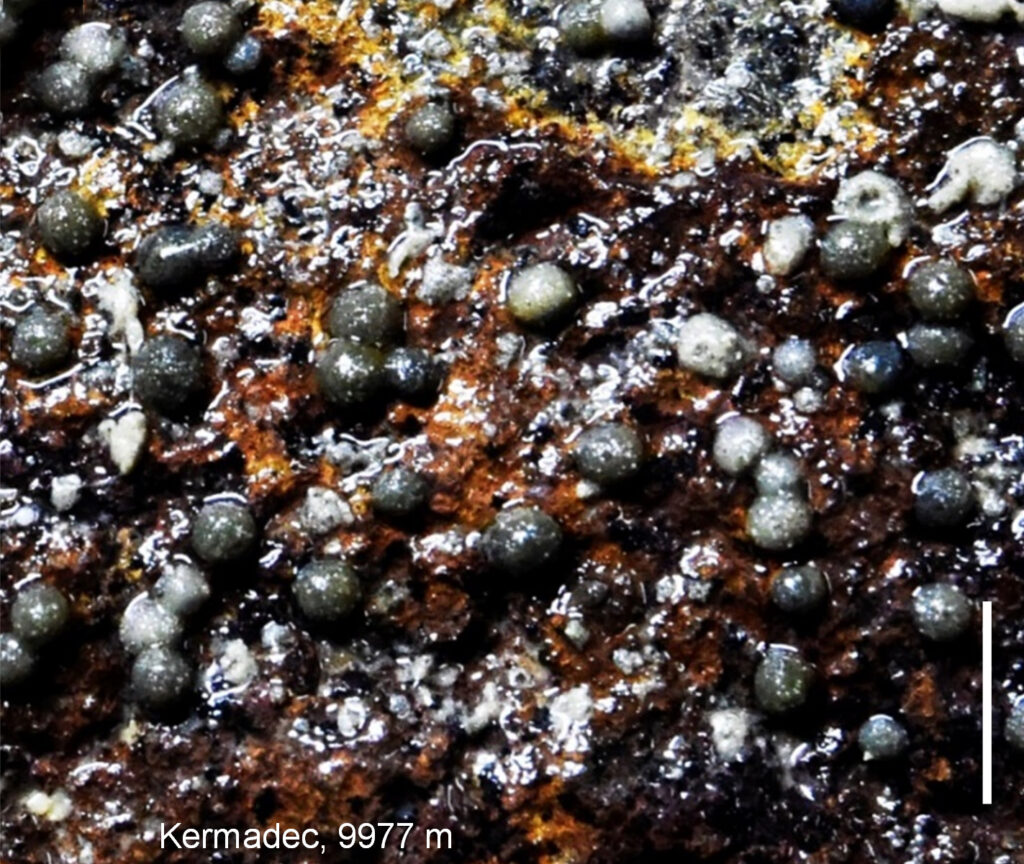
As part of a project led by Chinese scientists to study life in the deep-sea trenches of the world’s oceans, researchers have now discovered a hidden fauna on rock surfaces at a depth of about 10,000 meters. The researchers found a new, diverse fauna consisting primarily of filamentous and sessile protists and foraminifera. The study was recently published in the journal Science.
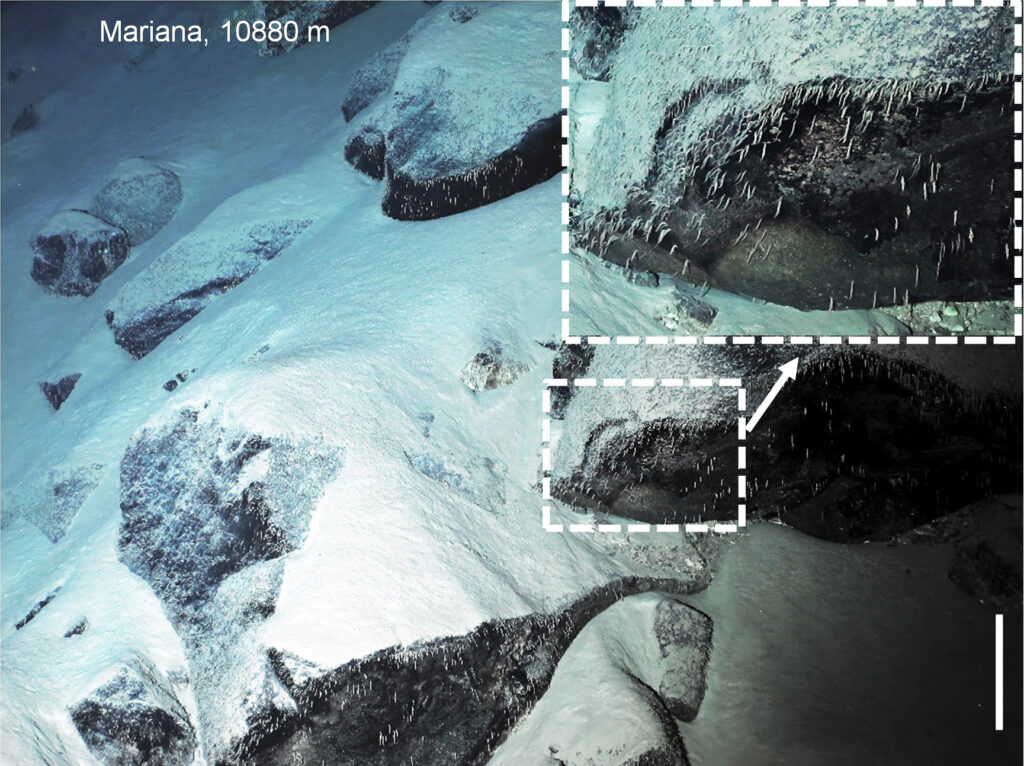
Life in the darkness of deep-sea trenches has been scarcely studied to date. Collecting rock samples and organisms colonizing the hard substrate from depths of up to 11,000 meters is difficult. Nevertheless, researchers from the Chinese Institute of Deep-sea Science and Engineering (IDSSE) have now succeeded in collecting samples from the rocky bottoms of the Kermadec and Mariana Trench using the manned submersible Fendouzhe—at a depth of approximately 10,000 meters.
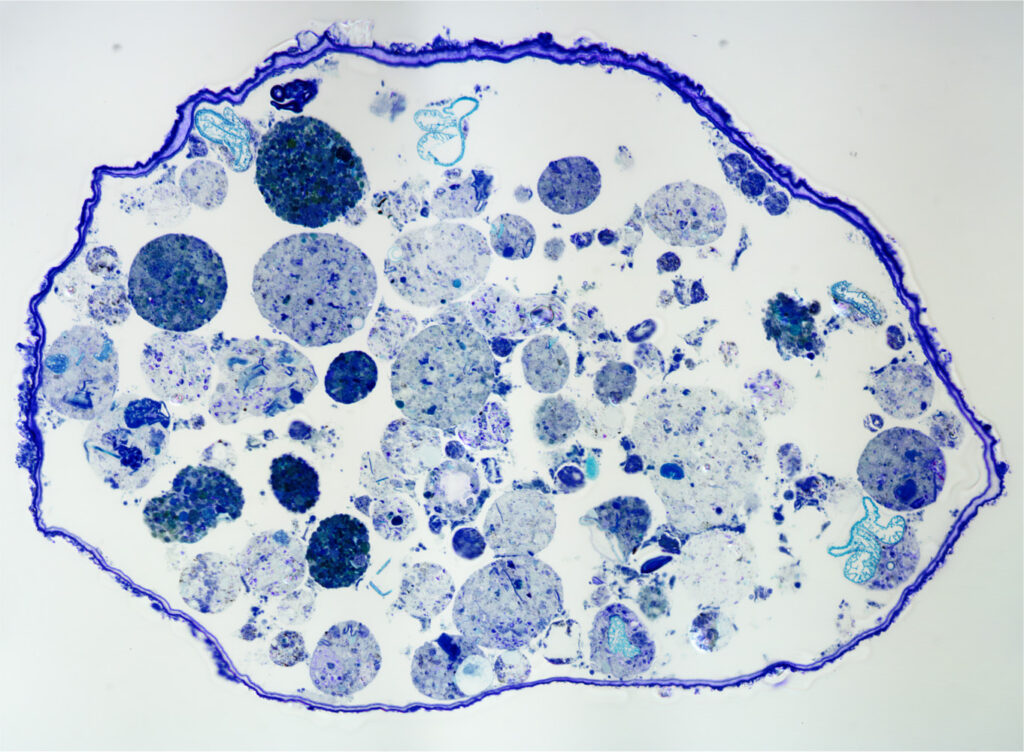
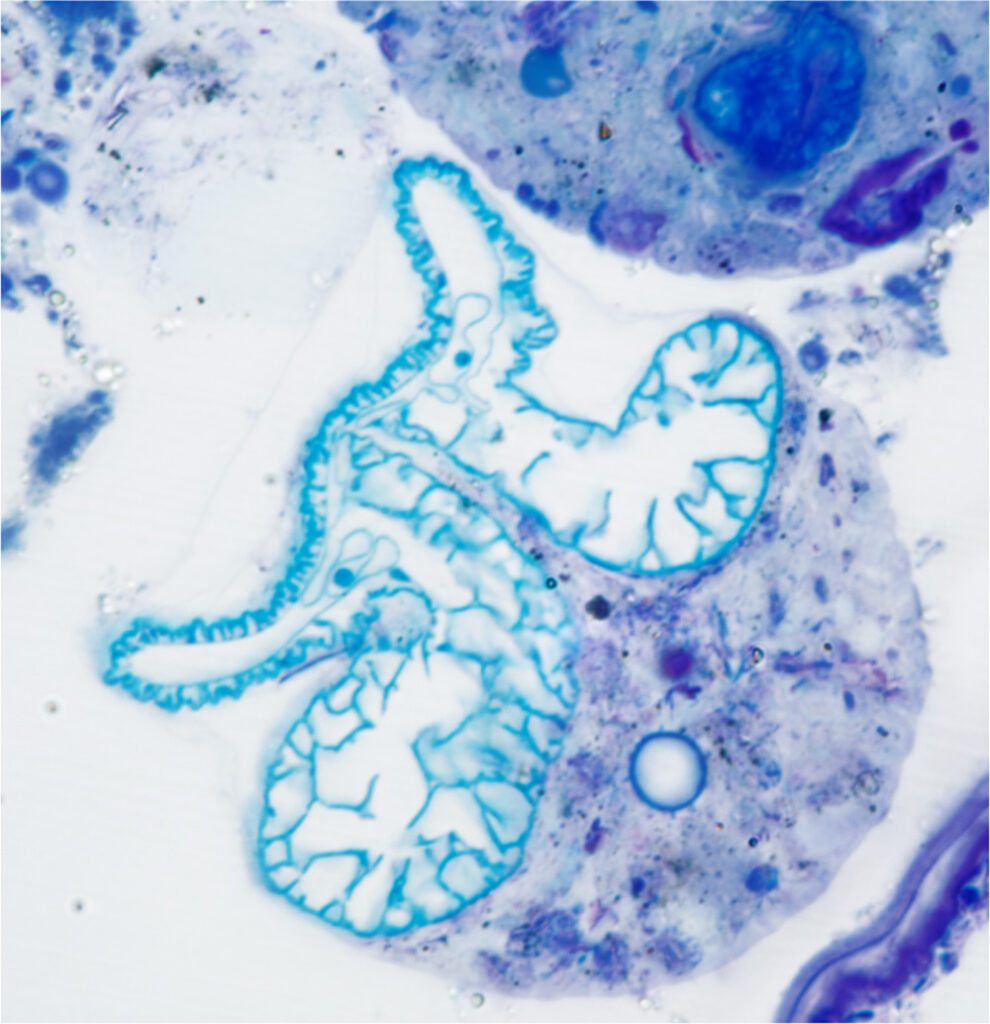
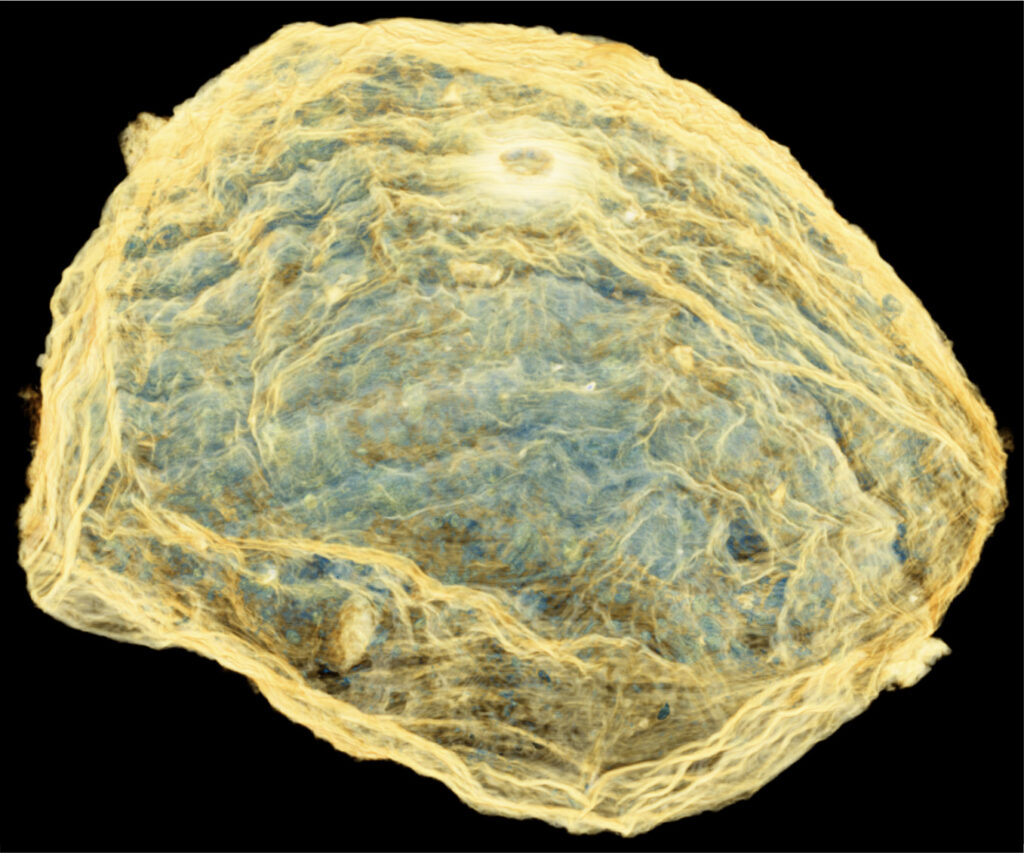
The researchers found a surprisingly large diversity of species on the deep-sea rocks, primarily filamentous and sessile protists as well as foraminifera. The scientists were able to identify a total of 32 species from six phyla, most of them only millimeters in size and previously unknown to science, including a new family of unicellular foraminifera and a new family of bryozoans. Munich-based zoologist Bernhard Ruthensteiner of the Bavarian State Collections of Natural History (SNSB) analyzed some of the organisms found using 3D analyses of CT data sets and cross-sectional series. With a surprising outcome: some of the single-celled organisms apparently feed on fragments of terrestrial plants: Among other things, the samples contained digested stages of pine pollen grains.
“The pollen grains have apparently traveled thousands of kilometers; they may have been carried by the wind from New Zealand. We did not expect organisms at such great depths to feed heterotrophic, on organic matter. Our results contradict earlier assumptions of an autotrophic diet, i.e., the uptake of inorganic substances for energy production,” says SNSB zoologist Bernhard Ruthensteiner.
The study was led by the Institute of Deep-sea Science and Engineering (IDSSE) of the Chinese Academy of Sciences (CAS). In addition to the Bavarian State Collections of Natural History (SNSB), participants included the National Institute of Water and Atmosphere Research, New Zealand; the National Oceanography Centre and the Natural History Museum, UK; the University of Vienna; the National Research and Innovation Agency, Indonesia; Tsinghua University; Xiamen University; and the Institute of Software of the Chinese Academy of Sciences.
Publication:
Xikun Song et al., Protist-dominated hard substrate faunas thrive at the deepest ocean depths. Science392, 749-754 (2026). https://www.science.org/doi/10.1126/science.aea7086
Scientific Kontakt:
Dr. Bernhard Ruthensteiner
SNSB – Zoologische Staatssammlung München
E-Mail: ruthensteiner@snsb.de