Ancient Mystery Resolved: Where Turtles Fit in the Tree of Life
Munich/Bayreuth, 28.05.2026
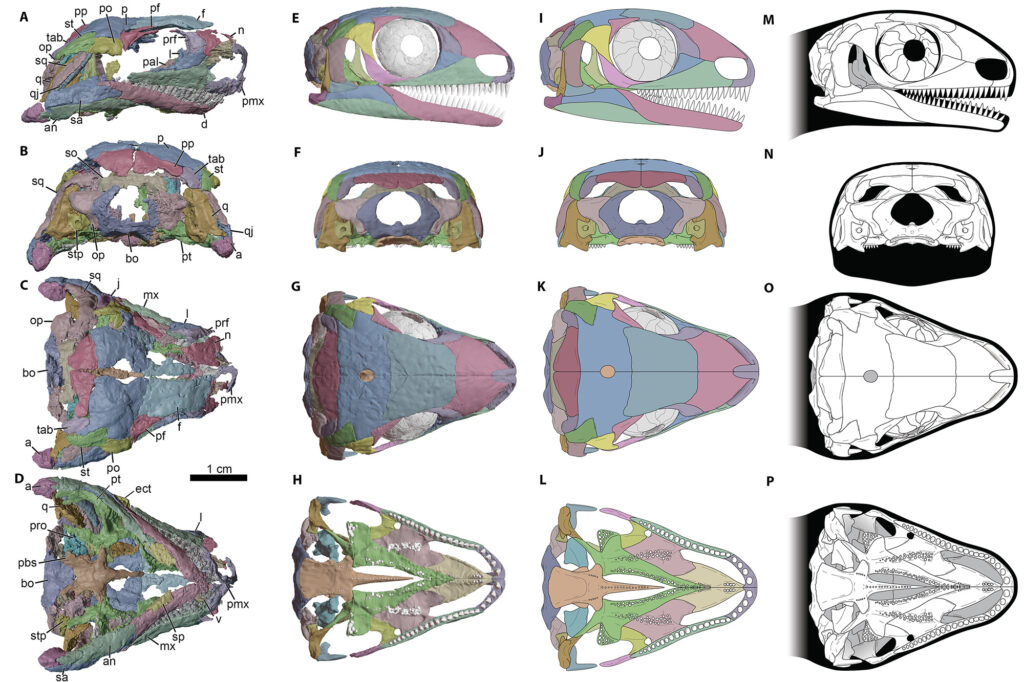
The presumed “proto-turtle” Eunotosaurus africanus is not a direct ancestor of modern turtles. This is confirmed by a new analysis of the evolutionary relationships among primitive turtles conducted by an international team of paleontologists. The findings have now been published in the journal Current Biology.
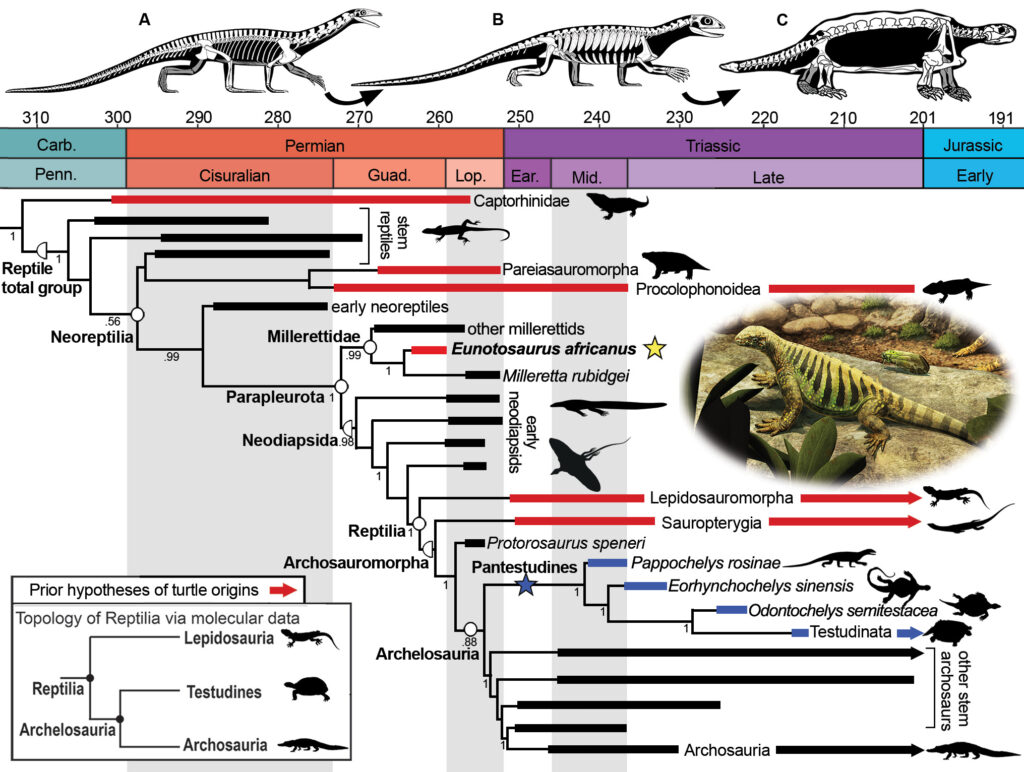
The evolutionary relationships of most vertebrate groups are well understood today. Even highly modified forms such as whales or birds can be clearly placed within the tree of life thanks to genetic and morphological data. Turtles, however, have long remained an exception: Genetic studies identifiy them as relatives of the so-called archosaurs, a group that includes birds and crocodiles. However, clear morphological evidence has been lacking until now—and early fossils even seemed to contradict this classification. A new international study led by Xavier Jenkins of the American Museum of Natural History in New York, with the participation of turtle expert Serjoscha Evers from the Bavarian State Collections of Natural History (SNSB), now provides a comprehensive reassessment.
Based entirely on morphological data rather than DNA, the phylogenetic analysis provides, the first robust paleontological support for the genetically predicted close relationship between turtles and the bird–crocodile lineage. “Our results show that turtles are indeed the closest living relatives of the archosaurs and occupy a very basal position in the family tree,” says SNSB paleontologist Serjoscha Evers. “At the same time, we can better constrain the timing of their origin 255 million years ago toward the end of the Permian.”
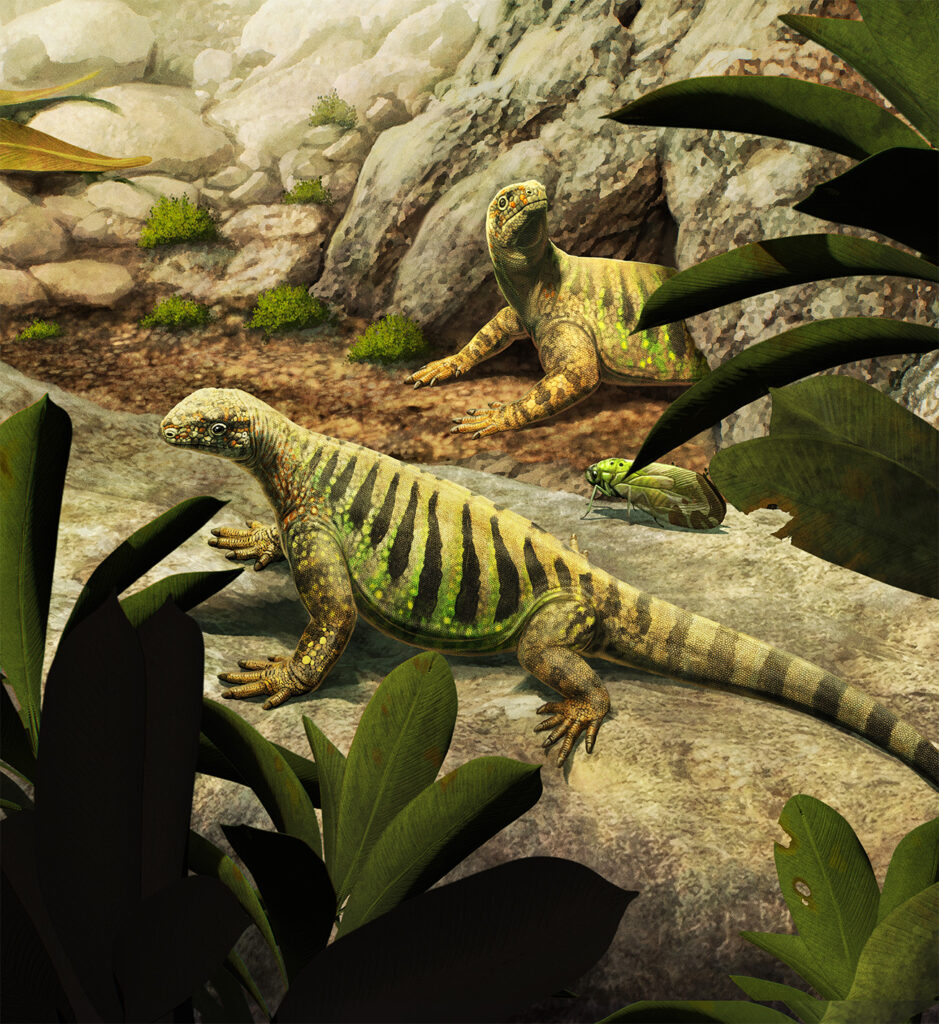
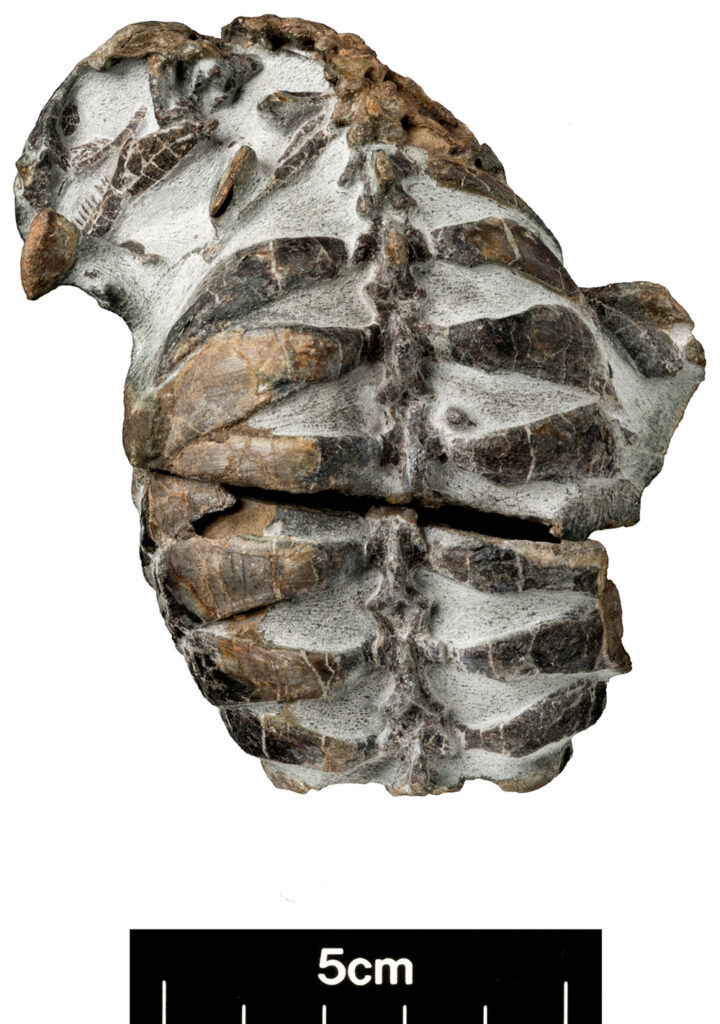
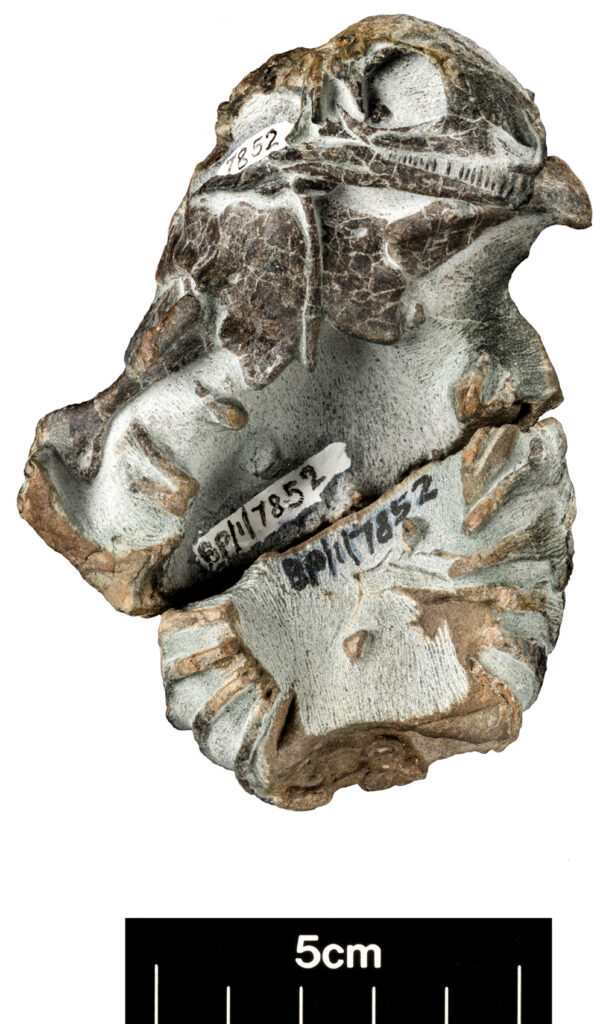
The study focuses on both early shelled turtles and their shell-less predecessors. Particularly surprising is the reevaluation of Eunotosaurus africanus, a 260-million-year-old fossil from South Africa that was previously considered a possible “proto-turtle.” The new data show that this species does not belong to the turtle lineage but instead represents an early relative of reptiles as a whole. Crucial evidence comes from newly revealed details of the braincase anatomy.
The research team examined the fossils using high-resolution computed tomography and analyzing their anatomical features in unprecedented detail. “We included a very broad spectrum of potential turtle relatives in our study,” says Evers. “The combination of modern CT technology and the expertise of an interdisciplinary team was crucial.” Fifteen researchers from the U.S., South Africa, the U.K., France, and Germany participated in the study.
The detailed anatomical analyses also provide new insights into the ecology of early turtles. Eunotosaurus was likely a burrowing reptile, as indicated by skeletal adaptations such as broadened ribs or robust claws, similar to those found in armadillos. However, other early members of the turtle lineage with partially developed shells show adaptations to life in water. The researchers speculate that the turtle shell may have evolved in water.
Serjoscha Evers directs the Urwelt Museum Oberfranken in Bayreuth, one of ten museums of the Bavarian State Collections of Natural History (SNSB).
Publication:
Xavier A. Jenkins, Brandon R. Peecook, Jonah N. Choiniere, Valentin Buffa, Julien Benoit, Claire Browning, Vincent Fernandez, Kathleen Dollman, Timothy W. Gomes, Gary A. McGaughey, Cy J. Marchant, Adam J. Fitch, Michael O. Day, Serjoscha W. Evers, Roger B.J. Benson. The phylogenetic origin of turtles, Current Biology, 2026, ISSN 0960-9822, https://doi.org/10.1016/j.cub.2026.04.070
Scientific Contact:
Dr. Serjoscha Evers
SNSB – Urwelt-Museum Oberfranken,Bayreuth
Phone: +49 921 511211
E-Mail: evers@snsb.de