After the Fall of Rome: How the Population of Central Europe Emerged
Munich, 29.04.2026
An international study based on Bavarian findings shows that southern Germany‘s population after the collapse of the Roman Empire developed through the gradual intermingling of different groups and regional mobility—not through single large-scale migrations. The study has now been published in the prestigious journal Nature.
Between antiquity and the early Middle Ages, many villages and towns emerged in southern Germany on former Roman territory or in the immediate vicinity of the Limes, the former border of the Roman Empire. Until now, this phase of settlement following the fall of the Western Roman Empire was often interpreted as the result of large-scale invasions by Germanic tribes. New genomic analyses now show that the settlement of southern Germany did not occur through individual large-scale conquests, but rather through gradual, smaller-scale migration processes.
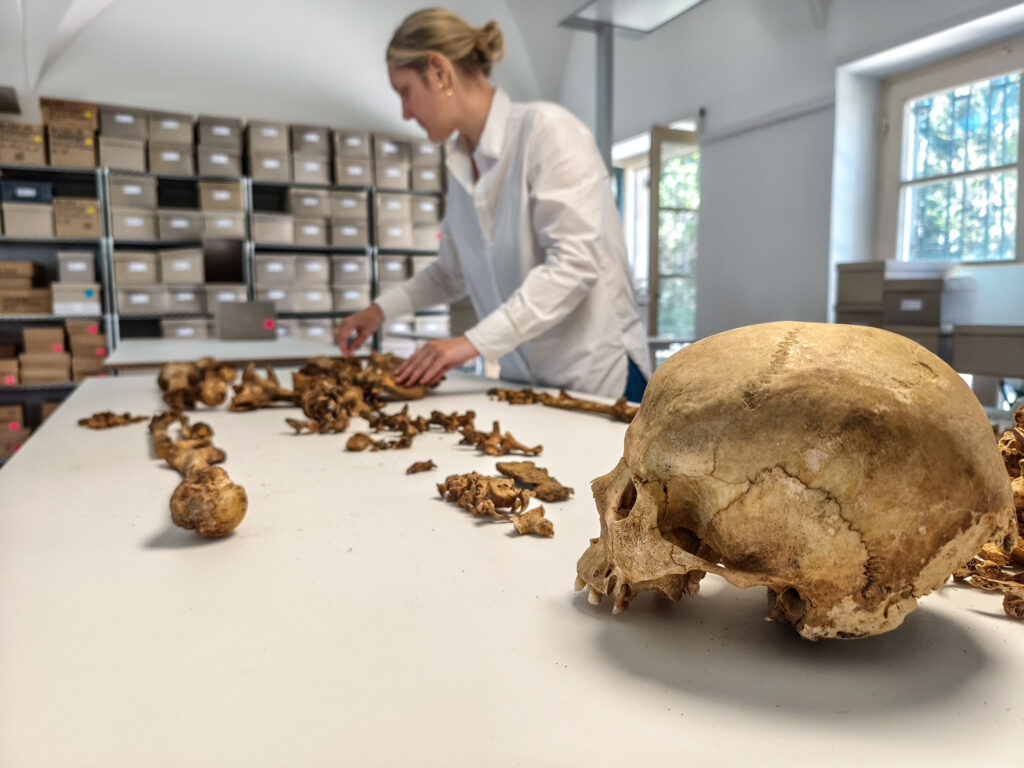
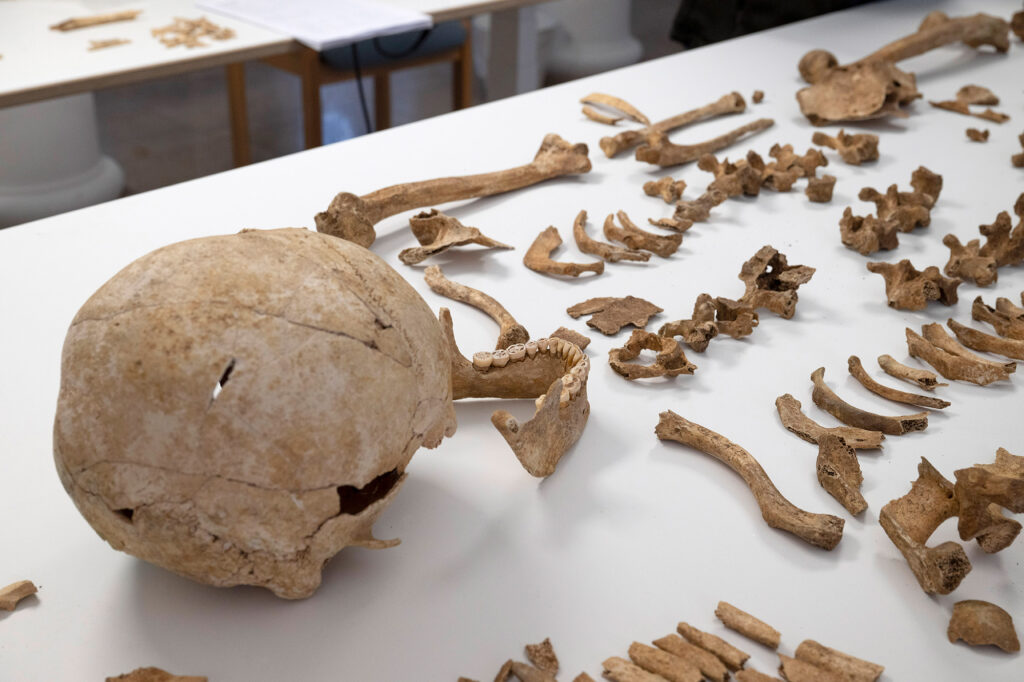
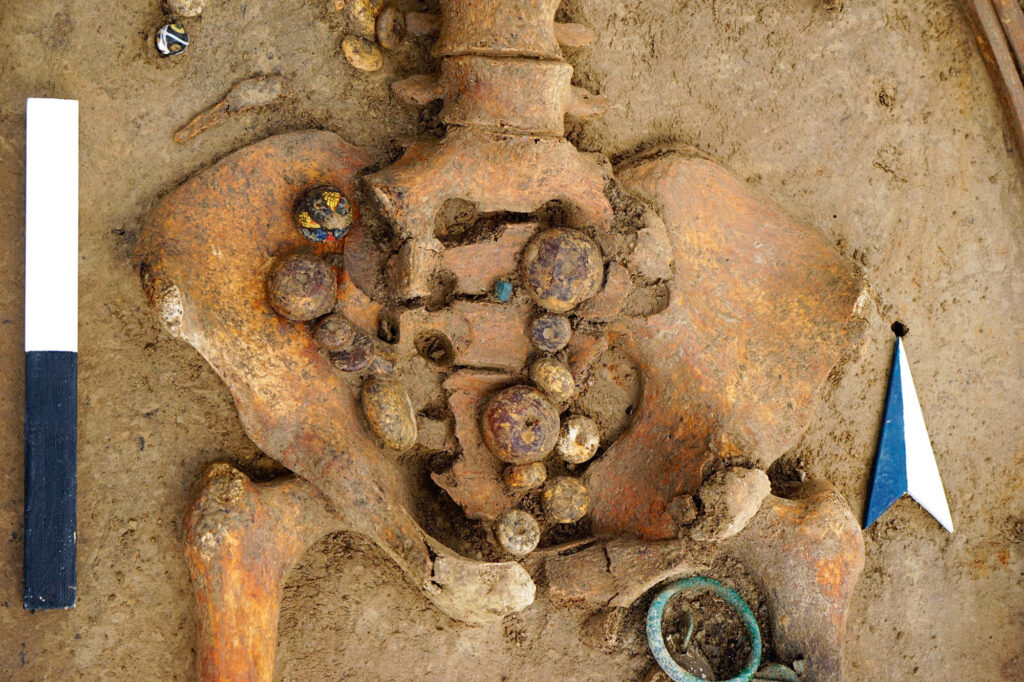
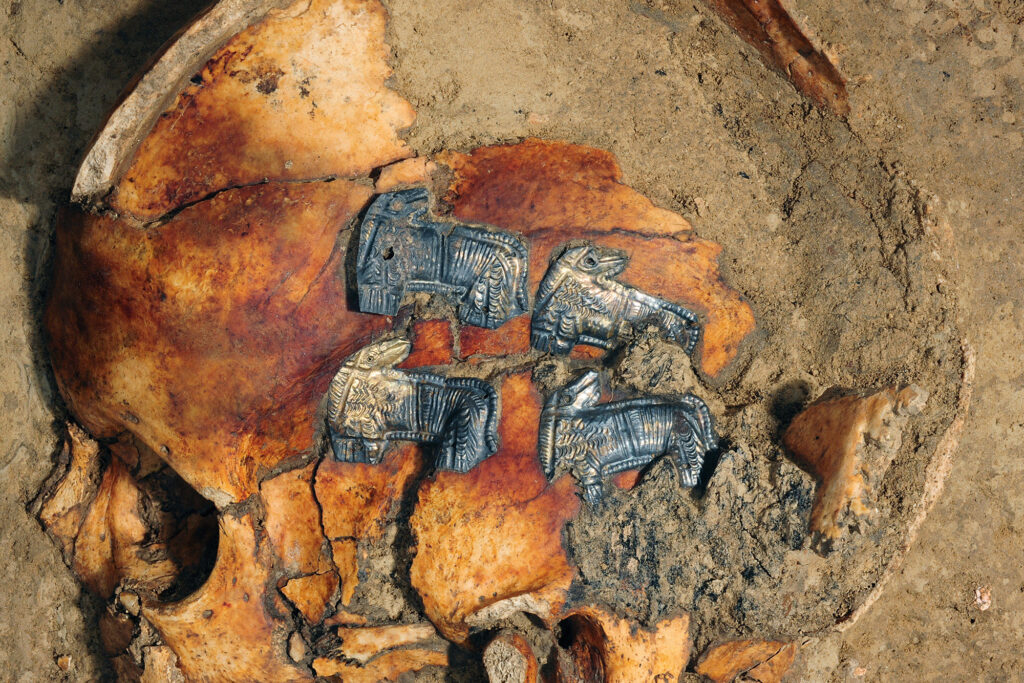
An international research team of anthropologists, historians, and archaeologists has analyzed the genomes of people from the period between 400 and 700 CE. The study examined skeletal remains from row grave fields in southern Germany, including sites in Bavaria such as Weilheim, Ergoldsbach, Burgweinting, and the Essenbach-Altheim burial ground in the Landshut district. Early medieval cemeteries such as these were widespread in southern and western Germany from the mid-5th century onward and, due to their location near the Danube Limes, were of great interest to the researchers.
The data show that, following the dissolution of Roman administrative structures, genetically distinct groups initially intermingled. In the process, people with northern roots encountered populations from Roman-influenced urban and military settlements, whose origins were themselves diverse. Genetic mixing took place through the migration of smaller groups within just a few generations. After only 150 years, the population south of the Limes already resembled modern Central Europeans in its genes. The researchers attribute this rapid mixing to a shared cultural background: the way of life and traditions of late Roman society may have played a unifying role. The reconstruction of family structures shows that society was predominantly characterized by nuclear families; marriages were monogamous, and avoided between close relatives. Inheritance rights were passed down through both daughters and sons.
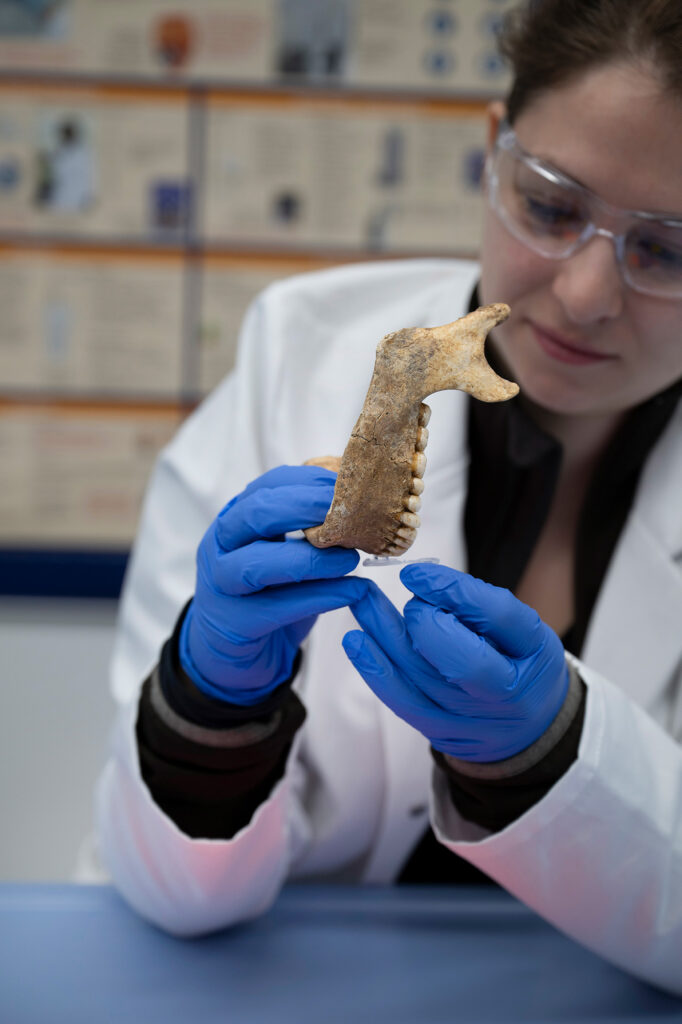
Anthropologists Michaela Harbeck and Maren Velte from the Bavarian State Collections of Natural History (SNSB) played a key role in the study. In addition to providing key collections, osteological and isotopic analyses were conducted at the anthropological collection in Munich, Germany. “Our analyses of bone structure and specific chemical signatures in the bones provided supplementary information on the mobility and origins of people at that time. These confirm the genetic findings,” explains SNSB anthropologist Maren Velte.
“Our collection holdings make it possible to address fundamental questions regarding population development during the transition from Antiquity to the Middle Ages based on a robust empirical basis. The study underline how closely biological and cultural developments are intertwined,” says Michaela Harbeck, curator of the SNSB’s anthropological collection. “We can clearly see how social structures persisted across political transformations.”
Archaeologists and conservators from the Bavarian State Office for the Preservation of Historical Monuments (BLfD) provided technical support for the excavations of the burial grounds studied in Bavaria and prepared the artifacts for archaeological analysis. The population genetic studies now significantly complement the archaeological findings and their scientific interpretation. Jochen Haberstroh, deputy head of the Department of Archaeological Heritage at the BLfD, says: “Old Bavaria is an excellent laboratory for studying the transition from antiquity to the Middle Ages. This project demonstrates the great potential of researching Bavarian archaeological sites in collaboration with cutting-edge scientific research.”
The study was initiated by researchers at the University of Tübingen, the University of Freiburg, and the Bavarian State Collections of Natural History. Population geneticists from the University of Mainz and the University of Fribourg, Switzerland, were also involved. The research was funded by the German Research Foundation (DFG) as part of the Tübingen Research Group 2496 “Migration and Mobility in Late Antiquity and the Early Middle Ages” and by the Swiss National Science Foundation (SNSF).
Publication:
Blöcher, J., Vallini, L., Velte, M. et al. Demography and life histories across the Roman frontier in Germany 400–700 ce. Nature (2026). https://www.nature.com/articles/s41586-026-10437-3
Scientific Contact:
Prof. Dr. Albert Zink, Head of department
SNSB – Staatssammlung für Anthropologie München
Phone: +49 89 5488 438 11
E-Mail: zink@snsb.de