Fossil excavations
Research excavation in the Plattenkalke of Brunn/Upper Palatinate
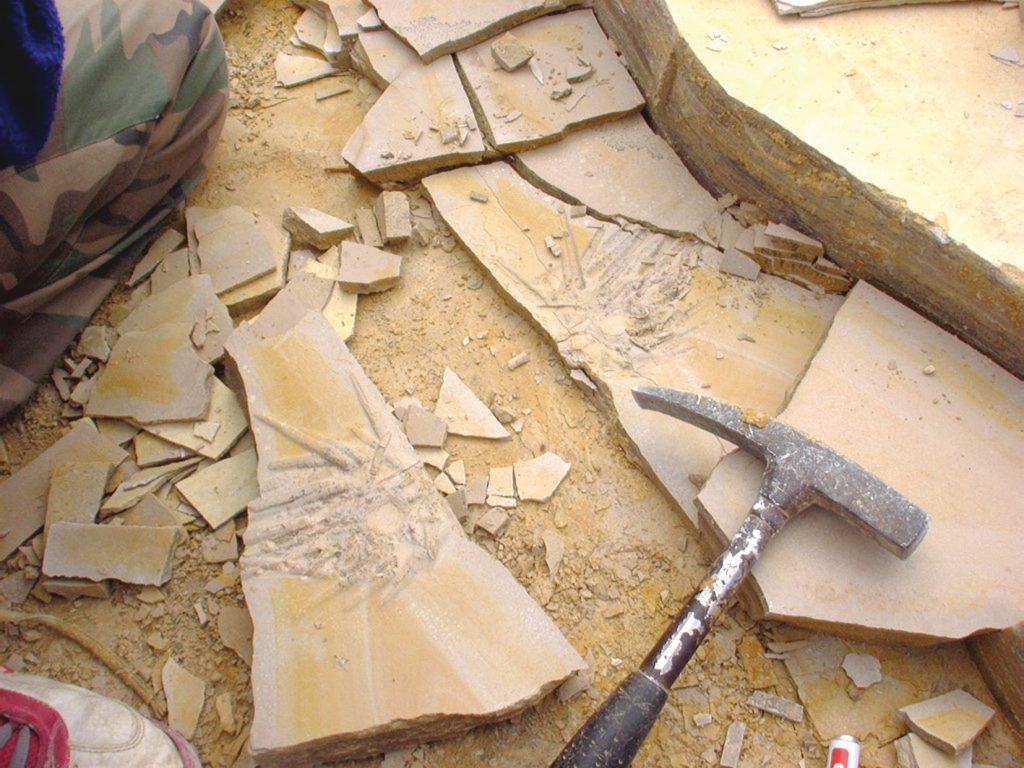
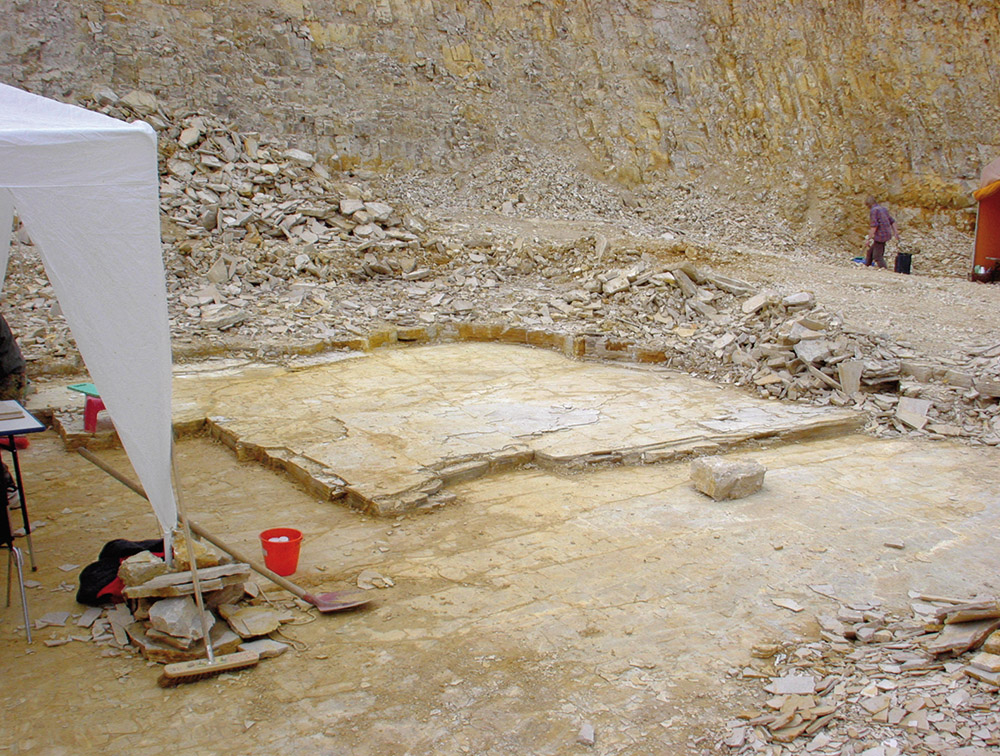
Since the mid-1990s, the association “Bildungs- und Dokumentationszentrum Ostbayerische Erdgeschichte e. V.” (Regensburg) has been conducting scientific fossil excavations in the former Pielenhofen forest quarry northwest of Regensburg in close contractual cooperation with and with the support of the Bavarian State Collection of Paleontology and Geology in Munich (BSPG).
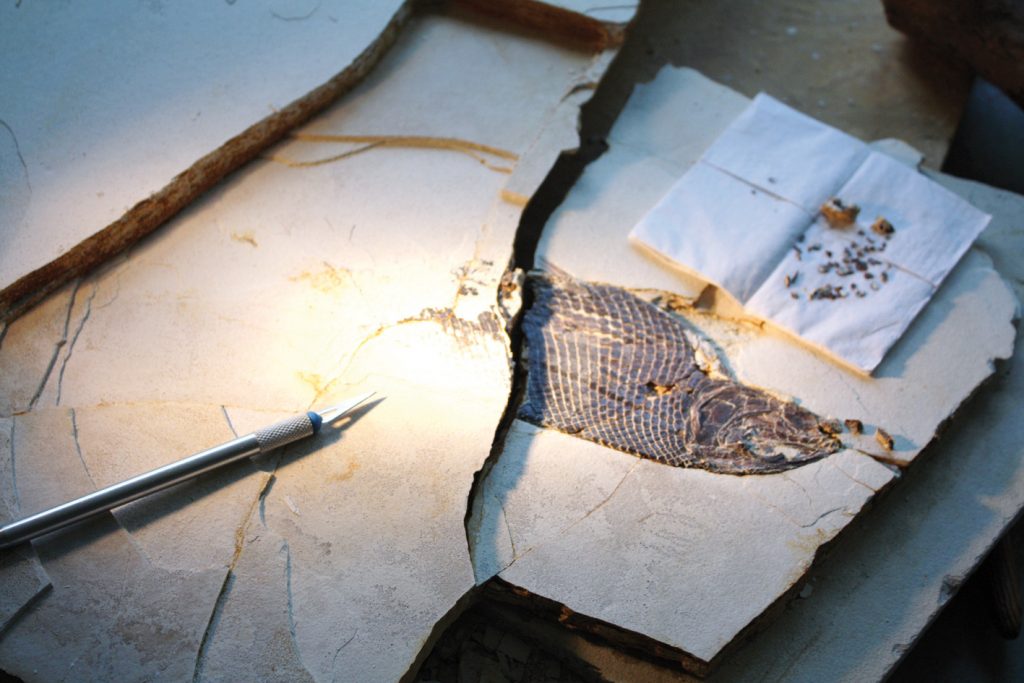
For more than 30 years now, the Brunner excavation site has yielded a rich fauna and flora of Upper Jurassic (Upper Kimmeridgian, approx. 153 million years old) limestone slabs. Typical organisms of the late Jurassic period in Europe, including numerous new as well as purely endemic (i.e., only found here) species, have been identified. These include mainly marine ammonites, bivalves, crabs, sea urchins, and bony fish, but also animals and plants from former surrounding islands, such as cycads, bridge lizards, and pterosaurs.
The Brunn limestone slabs are particularly well known for their abundance of otherwise unknown young animals of various organisms. A complete baby crocodile of the very rare species Crocodilaemus robustus, was found, of which only one other specimen was previously known from Cerin (Département Ain) in France. Highlights of this excavation site include various pterosaurs, bridge lizards, fish, echinoderms, and plants.
During the annual excavation season, an average of 4–6 volunteer excavation assistants work under the scientific direction of the respective association chairman, currently Dr. Günter Schweigert from the Stuttgart Natural History Museum, in consultation with the Bavarian State Collection of Paleontology and Geology (SNSB-BSPG).
Research excavation Ettling
The research excavation of the Jura Museum Eichstätt in the slab limestone quarry of Ettling (Markt Pförring) mainly yields fossil fish of great scientific importance (see SNSB press releases). The preservation of these fishes is extraordinary and includes a 150 million year old fish fauna from the late Jurassic period with numerous, as yet undescribed species. The site provides a more detailed insight into the early evolution of modern fishes and their ecosystem. Ettling is a unique window into the history of the earth!
It also provides detailed insights into the formation of the Plattenkalke and the fossilization processes that led to the formation of the world-famous fossils. So far, these are poorly understood in detail. Many of the open questions can be answered by the data collection during the research excavation and accompanying analyses. First results have been presented at several international conferences.
Since 2008, 8-12 volunteers have been working on the fossil excavation every year. Interested laymen, hobby collectors and students actively help to generate data for research and thus make an active contribution to current research questions alongside the scientific community.
Fossil excavation in the Upper Jurassic plate Plattenkalke of Wattendorf
In the lime and dolomite quarry of Andreas Schorr near Wattendorf in the district of Bamberg, surprisingly very fossil-rich plate limestones of the upper Jurassic period were cut in 2000, which are comparable to the Solnhofen plate limestones. Since 2004, a team from the Naturkunde-Museums Bamberg has been conducting scientific excavations there, through which a large number of spectacular and scientifically valuable vertebrate fossils have been and are being recovered. This is a long-term finite deposit, so as many fossils as possible should be recovered promptly. This can only be done with the help of experienced volunteer excavation staff, as the museum’s human resources are too limited for this.
There are currently seven excavation volunteers working on the project.
Fossil excavation Mistelgau clay pit
In the former clay pit of Mistelgau near Bayreuth, numerous fossils of marine reptiles, primarily ichthyosaurs, have been found, recovered and prepared since the 1990s during regular scientific excavations by the Urwelt-Museum Oberfranken. The finds, mostly more or less complete but often partially disarticulated skeletons of animals of the genera Stenopterygius, Eurhinosaurus and Temnodontosaurus, but also partial skeletons of sauropterygians of the genus Plesiosaurus represent a unique collection of marine tetrapods, especially ichthyosaurs from the Upper Tarcian (Lower Jurassic).
Fossil excavation Hammerschmiede clay pit
In cooperation with the SNSB, Prof. Dr. M. Böhme, Eberhard-Karls-Universität Tübingen, has been leading the fossil excavations in the clay pit Hammerschmiede in Ostallgäu since 2021. The site became famous for the discovery of the remains of the ape fossil Danuvius guggenmosi, called “Udo”, which were discovered in 2019. The Hammerschmiede clay pit holds a rich fauna from the Middle to Upper Miocene period. The molasse sediments deposited there originate from river courses that once meandered in the foothills of the Alps. They contain the fossil remains of animals that lived in and along the river 11.6 million years ago, including fish, turtles, toads or beavers as well as elephants, rhinos, pandas, deer piglets and many more. The Free State of Bavaria supported the excavation with special funds.